
Did You Know? Maria Beasley’s Life Raft Had No Wrong Side Up |
An 1882 patent tackled what happens when a life raft flips |
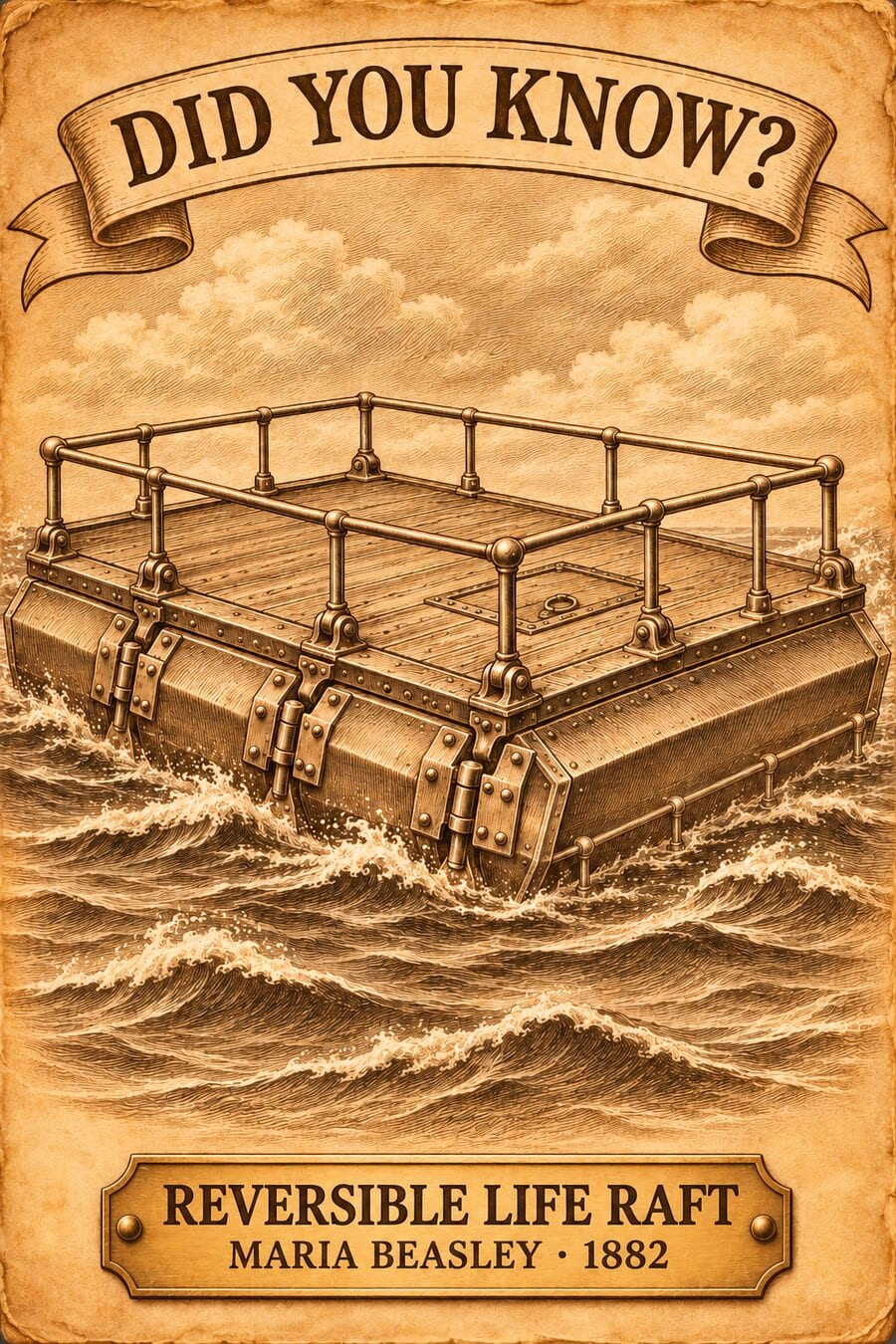
Picture hauling yourself onto a life raft in rough water, only to find its railing underneath you.
Maria Beasley saw a way around that problem: build the raft so either face could be the top.
Her May 16, 1882 patent described an improvement to a life raft she had patented two years earlier.
It used hinged metal floats that could fold for storage and spread out into a flat platform when needed.
The ends of the floats were bevelled so the raft was designed to ride on the water either way up.
The clever part was the railing.
Its hinges let it swing into place above whichever face was on top.
She also described access to water and provisions from either side.
In one version, she proposed a second railing so the raft could be used after overturning without first having to right it.
The drawing shows how much thought went into stowing it, too: one view has the raft open for use, and another shows it folded away.
Beasley didn’t invent the first life raft; the 1882 patent was for specific improvements to her earlier design.
What makes the idea stick is the question behind it: instead of asking how to flip a raft back over in rough water, why not build one that still works when it’s upside down? |
5 Comments
Join the conversation
Reframing the whole problem instead of trying to solve the original one. That is the kind of thinking that actually works.
Folding metal floats in 1882. That is genuinely impressive engineering for the time.
The railing that swings to whichever side is up top is so simple it makes you wonder why nobody else thought of it first.
Never heard of Maria Beasley before. Really glad someone is writing about her.
I love these articles