
Did You Know? Who Invented Cat’s-Eye Road Reflectors? |
Percy Shaw’s small invention combined visibility with a clever self-cleaning design |
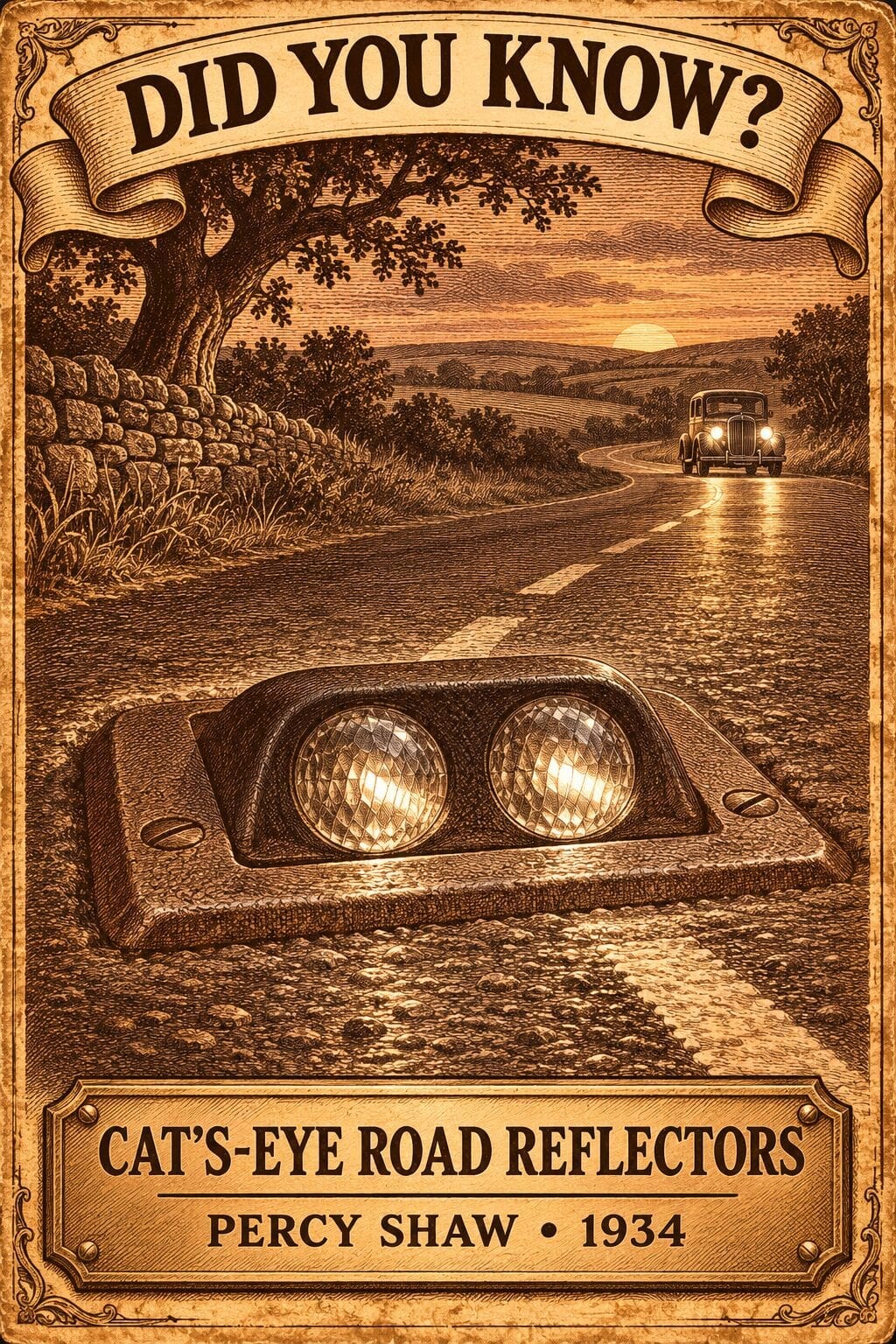
A small invention helped drivers find their way through the darkness—without needing its own electricity.
Percy Shaw, a road contractor from Halifax, England, patented his Catseye reflective road studs in 1934.
He established his manufacturing company the following year.
The studs reflected vehicle headlights back toward drivers, helping mark the road ahead.
But the ingenious part wasn’t simply making something shine.
They could clean themselves
Shaw’s design placed glass reflectors in a flexible rubber housing.
When a vehicle’s tyre passed over it, the reflectors pressed down into the assembly.
The movement wiped the glass, while collected rainwater helped wash away dirt.
That mattered because a reflector covered in road grime would be much less useful.
The design combined visibility, durability and cleaning in one small device.
Shaw’s invention became especially valuable during Britain’s wartime blackouts, when ordinary lighting was restricted.
It’s a reminder that useful inventions don’t always have to be large or complicated.
Sometimes, a clever improvement close to the ground can make a considerable difference.
Image: AI-generated illustrative reconstruction, not a patent drawing. |
0 Comments
Join the conversation
Be the first to comment
Share your thoughts above.