
Who Invented the Traffic Light? |
Uncovering the Surprising History Behind the Invention of the Traffic Light |
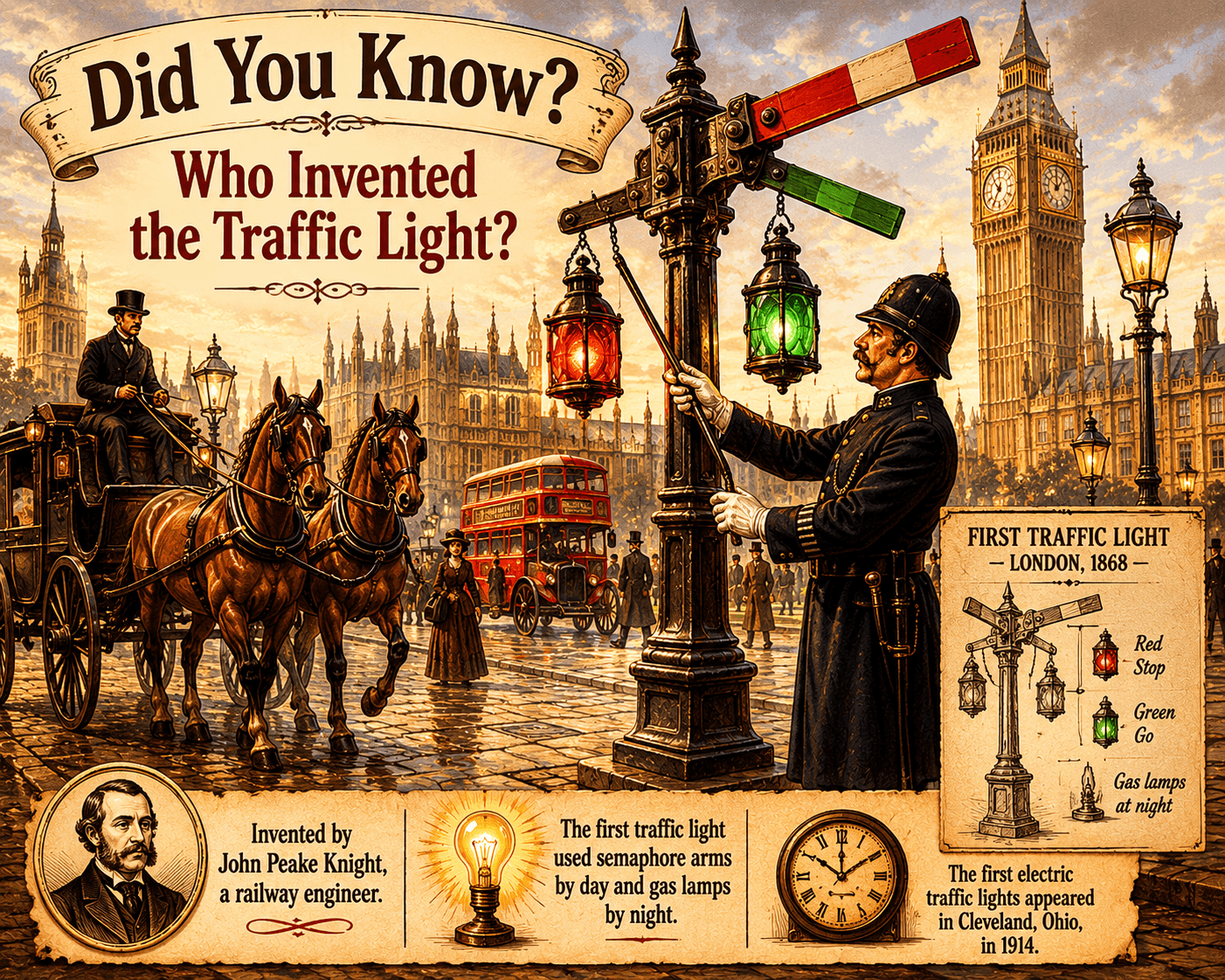
It’s hard to imagine modern roads without traffic lights, but the first one looked very different from the lights we know today.
The world's first traffic signal was installed in London, England, in 1868, near the British Parliament. It was designed by John Peake Knight, a railway engineer who borrowed ideas from railway signaling systems.
Unlike modern traffic lights, the original signal wasn't electric. During the day, it used movable semaphore arms, similar to railroad signals. At night, it relied on red and green gas-powered lamps to tell drivers and horse-drawn carriage operators when to stop or proceed.
Unfortunately, the first traffic light had a short lifespan. A gas leak caused an explosion that injured the police officer operating it, and the system was quickly abandoned.
As automobiles became more common in the early 1900s, safer and more reliable traffic signals were developed. In 1914, the first electric traffic lights appeared in Cleveland, and traffic control was forever changed.
Today, traffic lights quietly manage billions of vehicles around the world every day, helping keep intersections organized and safe.
Fun Fact:
The first traffic lights only had red and green signals. The now-familiar yellow (amber) light wasn't added until later to warn drivers that the signal was about to change. |
0 Comments
Join the conversation
Be the first to comment
Share your thoughts above.