
Your Bones are Important |
How to keep them healthy |
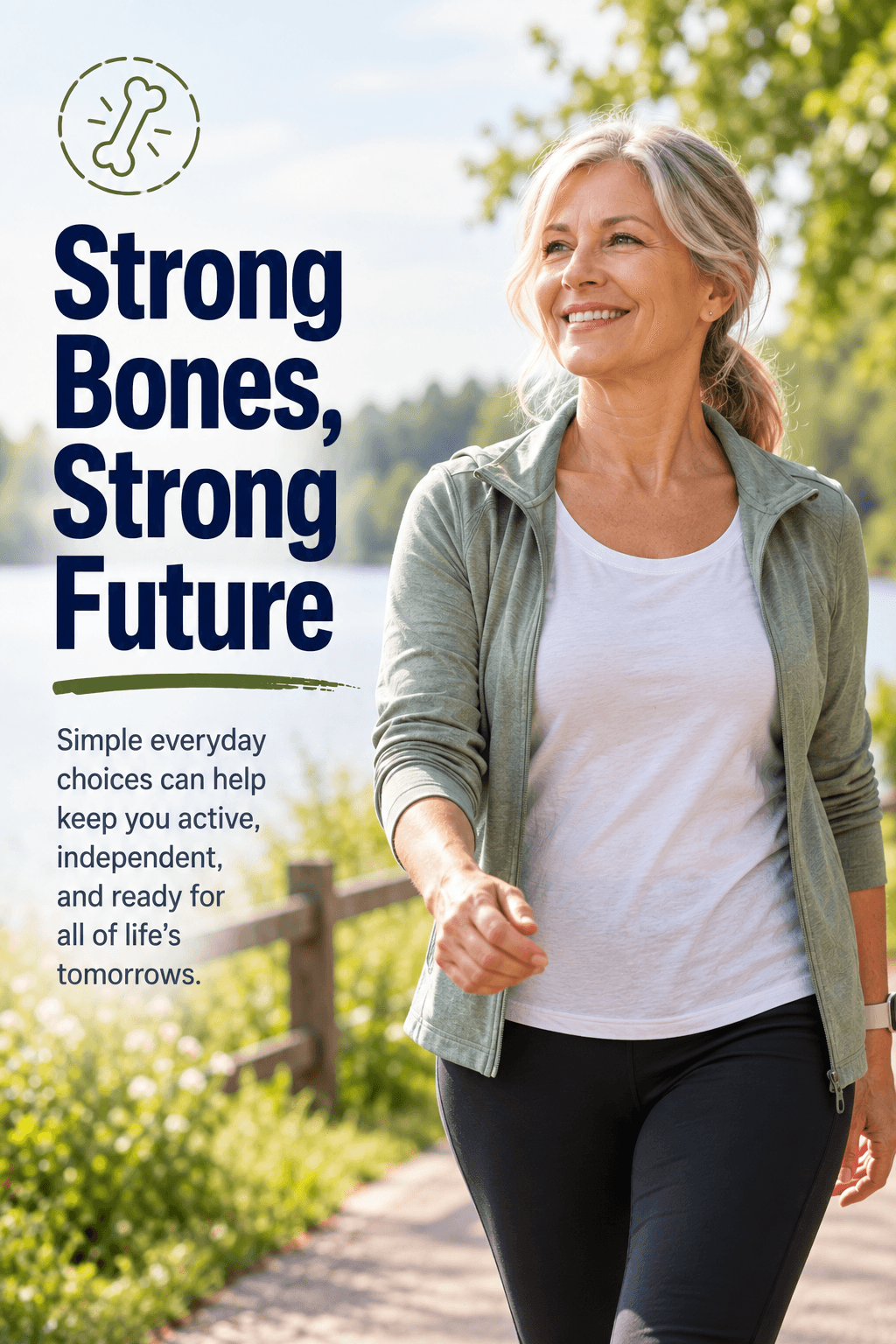
Strong Bones, Strong Future
Strong bones matter at every age—but they become especially important as we get older.
Women naturally begin losing bone density as they age, with the decline often becoming more noticeable after menopause. The encouraging news is that everyday habits can play an important role in helping maintain strong, healthy bones.
You don't need an elaborate exercise program or complicated diet. A few consistent choices can make a meaningful difference. Why Bone Health Matters
Bones aren't simply the framework holding us upright. They're living tissue that is continually changing throughout our lives.
Maintaining bone strength helps support:
That's why looking after your bones today is an investment in staying active tomorrow.
Put Your Bones to Work
Bones respond to activity.
Weight-bearing activities—where your body works against gravity—encourage bones to maintain their strength.
Good choices include:
You don't necessarily need a gym. Regular walks and everyday activities can be a great place to start.
Don't Forget Strength
Maintaining muscle is also important because stronger muscles help support your bones and improve stability.
Simple exercises such as standing up from a chair, wall push-ups, resistance-band exercises, or lifting appropriate hand weights can help maintain strength.
Start comfortably and gradually build from there.
Give Your Bones the Nutrition They Need
Calcium is an important building block for bones. Sources include dairy products, fortified alternatives, leafy green vegetables, tofu, and some canned fish.
Vitamin D helps your body absorb calcium. It can come from sunlight, certain foods, fortified products, and supplements when appropriate.
Nutritional needs vary, so anyone concerned about calcium, vitamin D, or supplements should discuss their individual needs with a healthcare professional.
Balance Matters Too
Strong bones are important, but preventing falls is equally valuable. Activities that improve balance—such as standing briefly on one foot while holding a sturdy counter for support—can help maintain stability and confidence.
Even a minute or two of balance practice can easily become part of your daily routine.
Quick Tip
Try combining bone-friendly activities with something you already do.
Take a walk after lunch, use the stairs when convenient, do a few chair stands while watching television, or spend some time working in the garden.
Small amounts of activity performed regularly add up. The Takeaway
You can't control every change that comes with aging, but you can give your bones the support they need.
Regular movement, strength exercises, good nutrition, and balance activities all contribute to maintaining bone health . Strong bones today can help build a stronger, more active future. |
8 Comments
Join the conversation
Interesting, didn't realize bones keep changing as we age.
Sometimes it feels too late to start but this makes me feel better about trying.
For those lactose intolerant like me, leafy greens and tofu do wonders.
I still think lifting weights at the gym helps more than gardening though.
Glad you mentioned balance. My aunt fell last year and it was rough.
Chair stands during TV is a great idea. Will try it tonight.
Always forget about Vitamin D. I need to get outside more!
Really helpful info, I didn't know gardening counted as exercise.