
From 4 a.m. to Your Phone: The Evolution of the Alarm Clock |
Discover Levi Hutchins and why he invented the alarm clock |
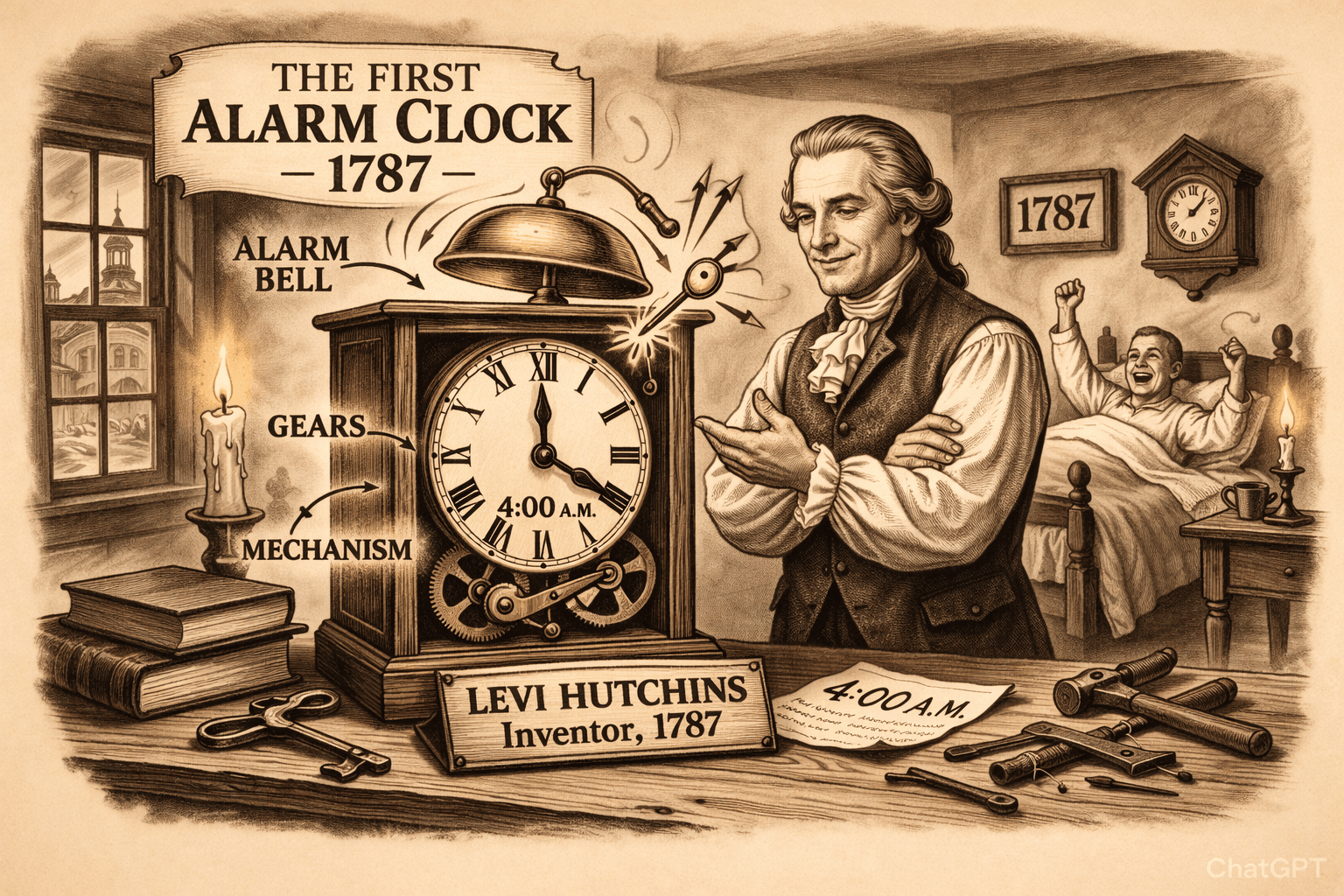
In 1787, Levi Hutchins, a clockmaker from Concord, New Hampshire, crafted what is recognized as the first American alarm clock.
Designed solely for his personal use, this device was set to ring at 4:00 a.m., the time Hutchins needed to start his day.
His invention lacked the flexibility to adjust the alarm time, reflecting his singular focus on punctuality.
Prior to Hutchins' creation, various forms of alarm mechanisms existed, but his design marked a significant step in personal timekeeping.
It wasn't until 1847 that Antoine Redier, a French inventor, patented the first adjustable mechanical alarm clock, allowing users to set their preferred wake-up times.
This innovation paved the way for mass production in the early 20th century, making alarm clocks accessible to the general public.
Today, while many rely on smartphone alarms, the legacy of these early timepieces endures.
In Sherwood Park, Alberta, the appreciation for traditional alarm clocks remains evident.
Local antique shops and collectors often showcase vintage models, reflecting a community interest in the evolution of timekeeping devices.
Additionally, the Smeltzer House, a historic site in Sherwood Park, occasionally hosts exhibitions that delve into the history of everyday objects, including timepieces.
These events offer residents a tangible connection to the past, highlighting how innovations like Hutchins' alarm clock have shaped daily routines.
Understanding the origins of the alarm clock not only provides insight into technological advancements but also underscores the timeless human desire for structure and punctuality in our lives.
As we set our alarms each night, we continue a tradition that began over two centuries ago, bridging history with modernity. |
0 Comments
Join the conversation
Be the first to comment
Share your thoughts above.