
Who Invented the Toothbrush? |
Uncovering the Surprising Origins of the Everyday Toothbrush |
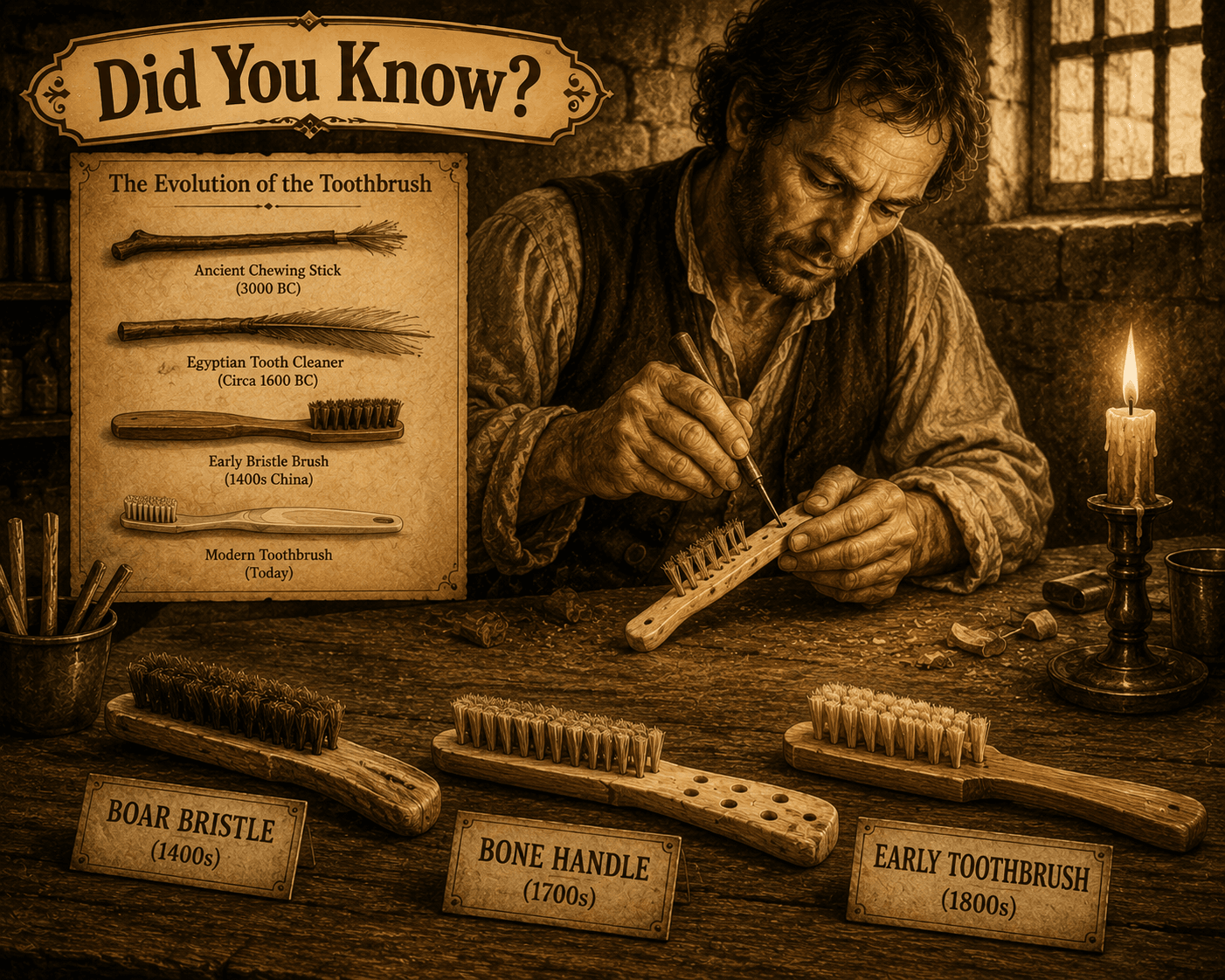
The toothbrush has been around far longer than most people realize—and early versions were a lot rougher than the soft-bristled brushes we use today.
The first toothbrush resembling a modern one appeared in China during the 1400s. It used coarse bristles taken from the necks of wild boars, attached to handles made from bamboo or bone. While effective, they were often far too stiff for comfortable brushing.
Before toothbrushes, people cleaned their teeth using cloths, twigs, feathers, or even chewing sticks from aromatic trees. Ancient civilizations, including the Egyptians and Romans, were already concerned about dental hygiene thousands of years ago.
In the late 1700s, an Englishman named William Addis helped popularize the toothbrush in Europe after creating one while in prison. Legend says he became frustrated with cleaning his teeth using a rag and soot, so he drilled holes into a bone handle and inserted bristles to create a more effective tool.
By the 1900s, toothbrushes became mass-produced, and softer nylon bristles eventually replaced animal hair.
Today, the toothbrush is one of the most common personal care items in the world—used billions of times every single day.
Fun Fact:The average person spends about 38 days brushing their teeth over the course of their lifetime! |
0 Comments
Join the conversation
Be the first to comment
Share your thoughts above.