
The Invention That Helped the World Move Up |
Revolutionizing Transportation: The Incredible Invention Behind the World's Vertical Progress. |
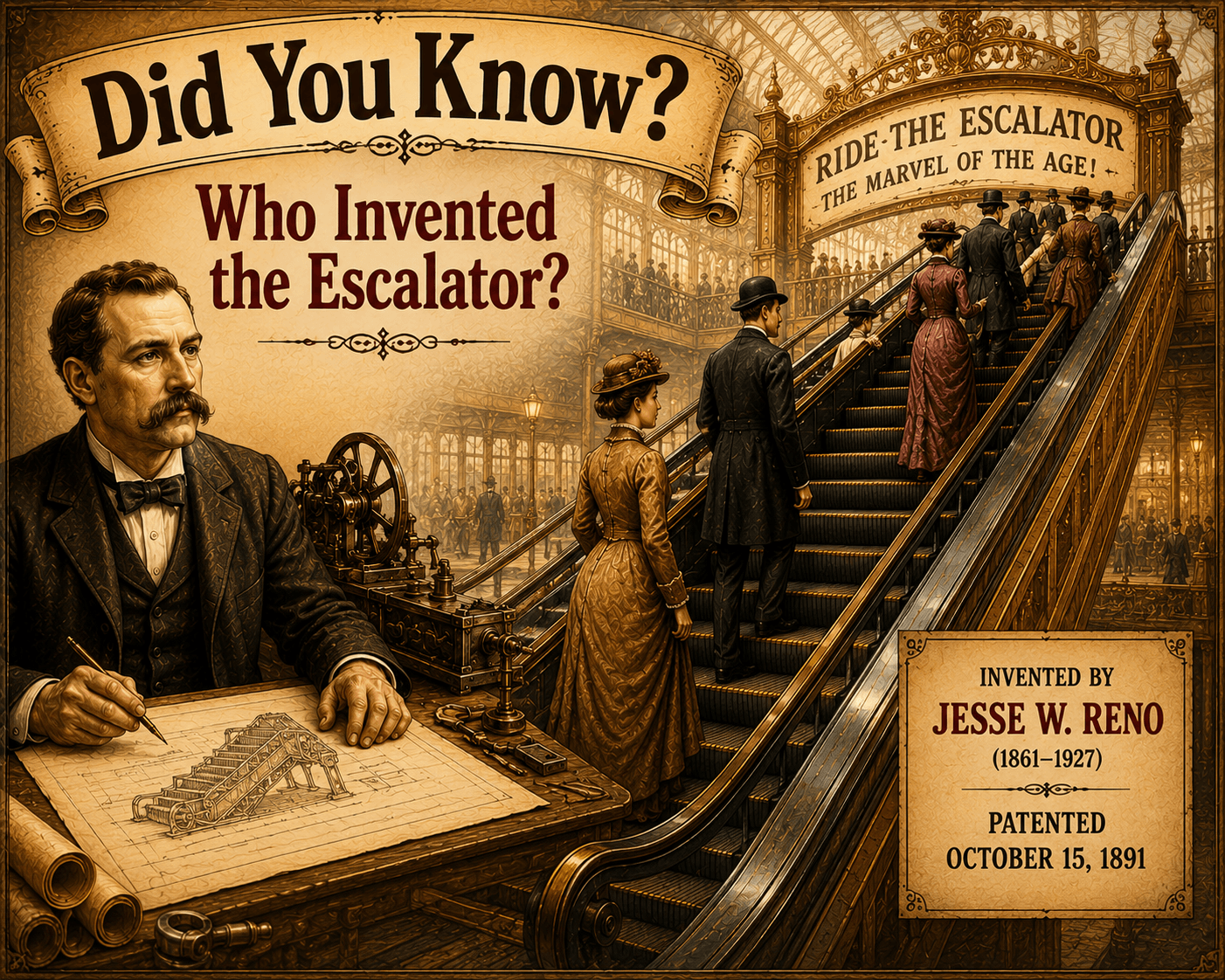
Most people ride escalators without giving them a second thought, but when they first appeared, they were considered an exciting attraction rather than a practical way to travel between floors.
The escalator was invented by Jesse W. Reno, an American engineer who patented his design in 1891.
Reno's invention wasn't originally intended for shopping malls or department stores. In fact, the first working escalator was introduced as an amusement ride at Coney Island in 1896. Visitors paid to ride the moving staircase simply for the novelty of the experience.
The ride was a huge success. People were fascinated by the idea of effortlessly moving upward without climbing stairs.
Businesses soon realized the invention could help move large numbers of people efficiently. Escalators began appearing in department stores, train stations, and public buildings, where they made travel faster and more convenient.
Over time, the design was improved and refined into the modern escalators we use today. Whether in airports, shopping centres, or subway stations, millions of people ride escalators every day—often without realizing they began as a fairground attraction.
Fun Fact:The word "escalator" comes from the Latin word scala, meaning "stairs." It eventually became so popular that the brand name became the generic name for moving staircases. |
13 Comments
Join the conversation
Honestly still feels like magic when you get on with a heavy bag at the mall.
I always wondered where the word came from. Thanks for the fact about ‘scala’.
Coney Island history is just full of odd inventions like this.
Now the real question: who started walking up them instead of just riding?
I get nervous on the really steep ones in subway stations. They're so fast!
So funny, I always just took escalators for granted. Never thought of them as anything special.
Wonder how safe those first ones were. Things back then didn’t have all the safety we got today.
My kids would still pay to ride an escalator if I let them. They think it's an adventure.
I remember my grandma always called it the moving stairs. She hated riding them!
Wait, so “escalator” used to be a brand name? Learn something new every day.
Makes sense businesses wanted to move crowds fast. Everyone rushes around on those now.
Wish I could've seen the look on people's faces the first time they saw one.
I had no idea escalators were once a ride at Coney Island. That's wild!