
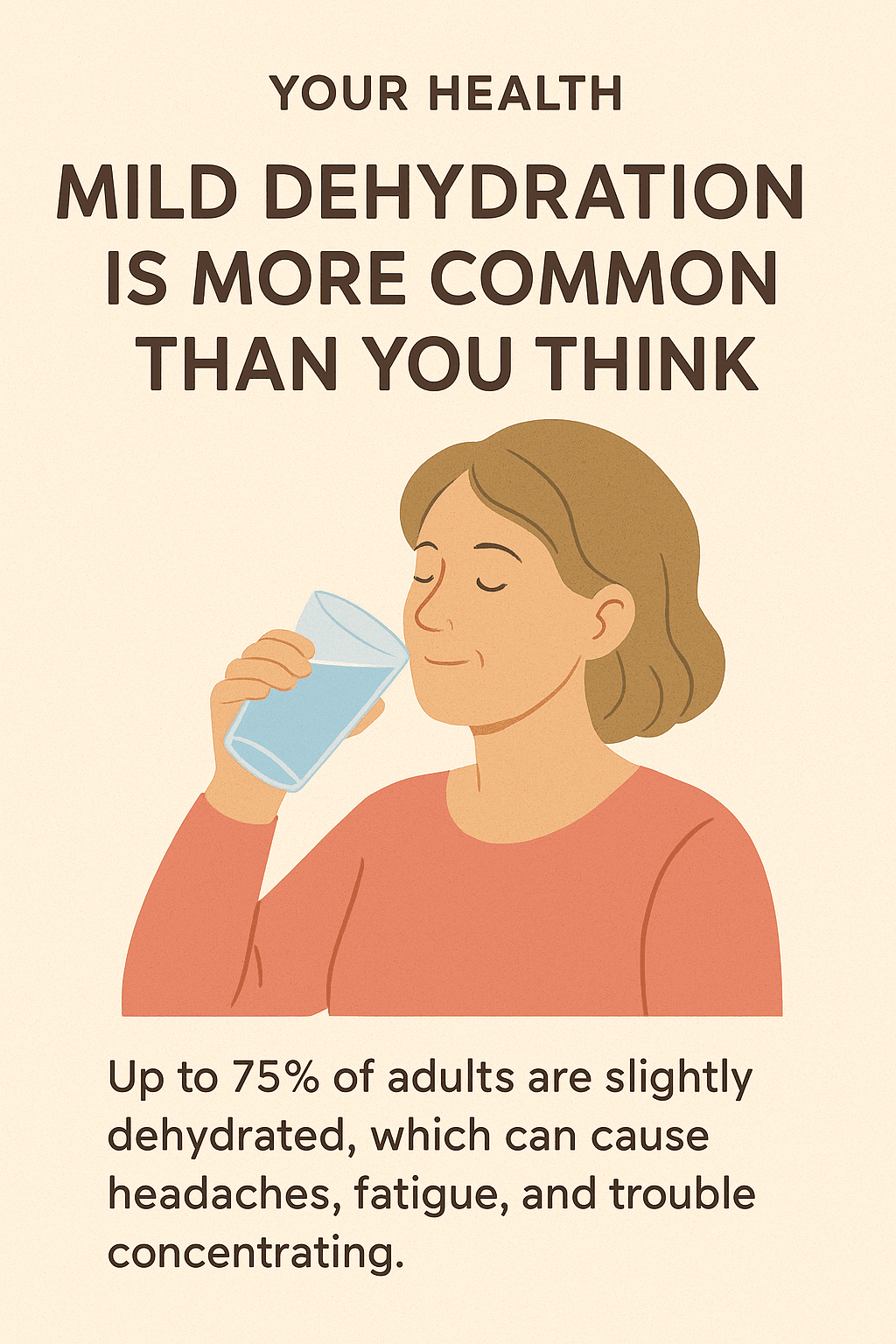
Mild Dehydration Is More Common Than You Think |
Most women assume they’re drinking “enough water.” |
Many individuals believe they're consuming sufficient fluids daily.
However, if your routine includes primarily coffee, sporadic sips during errands, and a neglected water bottle in your car, you might be more dehydrated than you realize.
Studies indicate that up to 75% of adults experience mild dehydration regularly.
Women in midlife may be particularly susceptible due to hormonal fluctuations.
Subtle Symptoms to Watch For
Mild dehydration often manifests through understated signs:
Afternoon fatigue
Difficulty concentrating
Light headaches
Dry skin
Unexplained cravings, even when not hungry
Interestingly, that mid-afternoon desire for a snack might be your body's way of signaling a need for water.
Personal Experience
One individual increased her water intake over a week and discovered her persistent low energy wasn't due to aging but dehydration.
She remarked, "I thought I needed vitamins... turns out I just needed a glass of water and a nap."
Many can relate to this revelation.
Determining Adequate Hydration
It's not about overconsumption but aiming for 6–8 cups daily, including tea.
Increase intake if you're active, perspiring, or experiencing hot flashes.
Practical Tip
Each time you check your phone, take two sips of water.
For many, this simple habit can contribute significantly to daily hydration needs.
Conclusion
While mild dehydration may not present dramatic symptoms, it can impact mood, energy levels, digestion, and skin appearance.
Incorporating more water into your daily routine is a straightforward and cost-effective way to enhance overall health.
|
0 Comments
Join the conversation
Be the first to comment
Share your thoughts above.