
The Accidental Invention That Revolutionized First Aid: The Story of Band-Aid |
From a Kitchen Mishap to a Global Phenomenon |
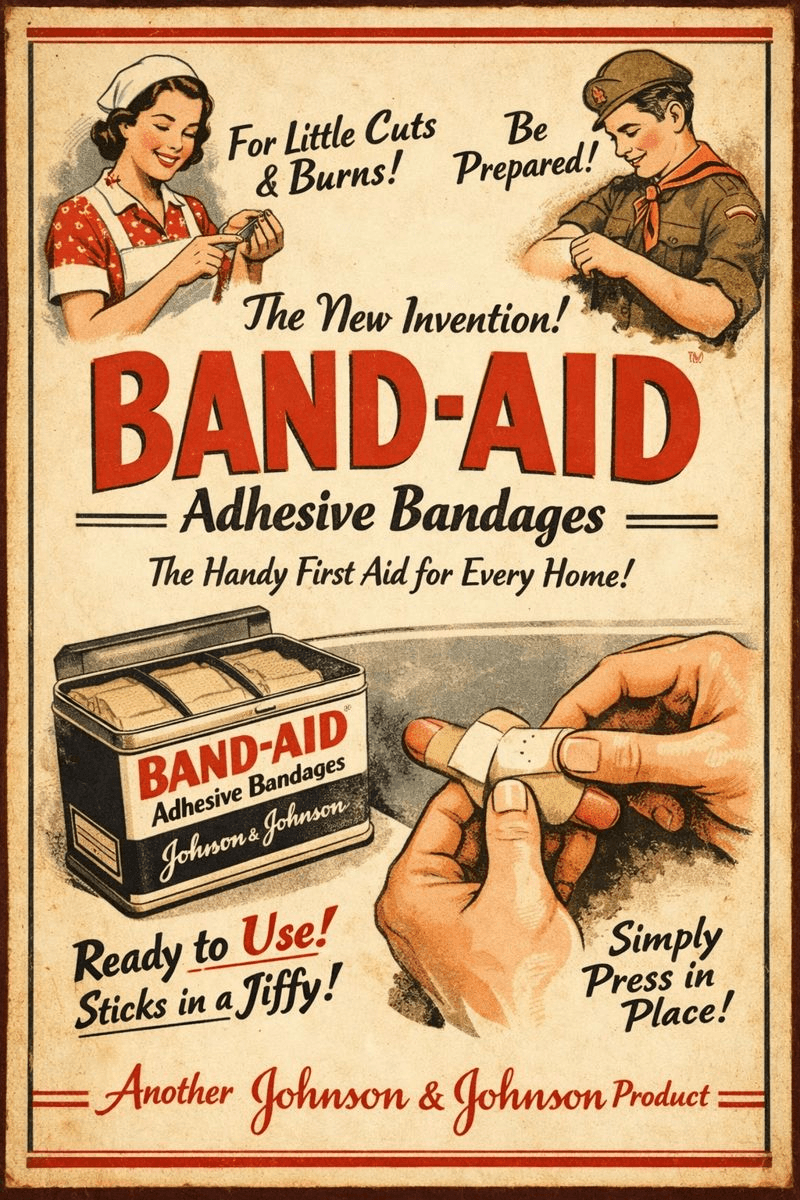
In 1920, a simple act of love and ingenuity led to the creation of one of the most iconic medical products: the Band-Aid.
Earle Dickson, a cotton buyer at Johnson & Johnson, noticed that his wife, Josephine, frequently injured herself while cooking.
At that time, treating minor cuts and burns was cumbersome, often requiring assistance.
Determined to help his wife care for her wounds independently, Dickson devised a solution.
He placed a small piece of gauze in the center of an adhesive strip and covered it with crinoline to keep it sterile.
This innovative design allowed Josephine to apply the bandage herself, marking the birth of the first self-adhesive bandage.
Recognizing the potential of Dickson's invention, Johnson & Johnson introduced the Band-Aid to the public in 1921.
Initially, the product was a 3-inch wide, 18-inch long roll that users cut to size.
However, sales were sluggish, with only $3,000 in revenue during the first year.
To boost awareness, the company distributed free Band-Aids to Boy Scouts and the military, a strategy that significantly increased the product's popularity.
By 1924, Johnson & Johnson had introduced machine-made, pre-cut Band-Aids, making them more convenient for consumers.
During World War II, millions of Band-Aids were shipped overseas, further cementing their place in first aid kits worldwide.
Over the decades, Band-Aid continued to evolve.
In 1951, the company introduced decorative bandages featuring popular characters, transforming a simple medical product into a fun accessory for children.
The 1970s saw the launch of flexible fabric bandages, enhancing comfort and mobility.
More recently, in 2021, Band-Aid introduced the OURTONE™ line, designed to better match diverse skin tones, reflecting a commitment to inclusivity.
Today, Band-Aid is sold in over 100 countries and remains a staple in households worldwide.
What began as a husband's effort to assist his wife has become a global symbol of care and healing.
This story serves as a reminder that sometimes, the most profound innovations arise from addressing everyday challenges with creativity and compassion. |
0 Comments
Join the conversation
Be the first to comment
Share your thoughts above.