
Who Invented the Paper Bag? |
Unlocking the mystery of the paper bag's origin - the surprising history behind this everyday essential. |
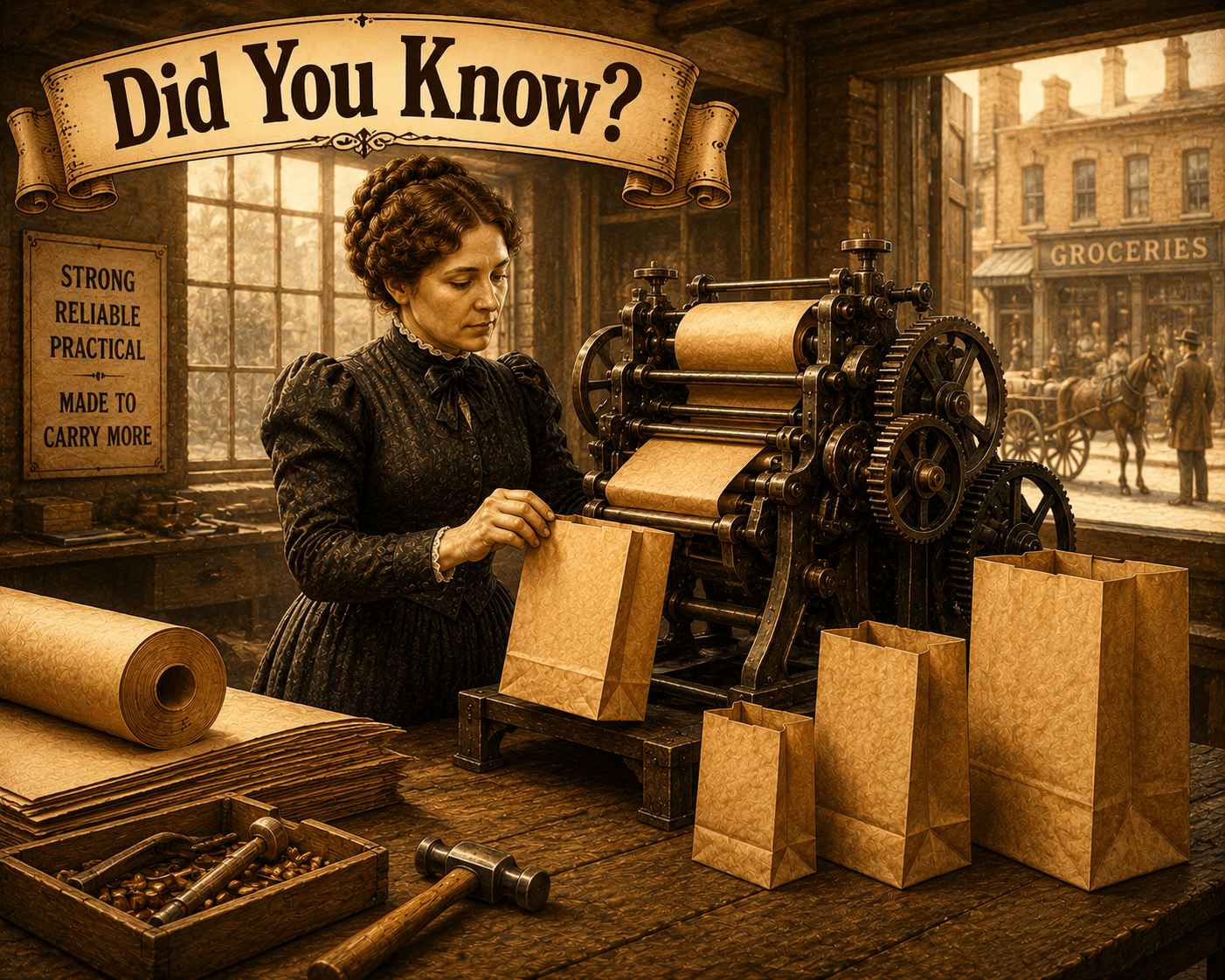
The paper bag is something most of us have used countless times, but its invention helped revolutionize shopping and packaging around the world.
In the early 1800s, paper bags already existed, but they were little more than folded envelopes. They couldn't stand upright and weren't very practical for carrying groceries or larger items.
Everything changed in 1852 when an American inventor named Francis Wolle patented the first machine capable of mass-producing paper bags. His invention made paper bags cheaper and more widely available than ever before.
However, those early bags still had a problem—they were shaped like envelopes and couldn't stand on their own.
Then came Margaret E. Knight, often called the "Mother of the Grocery Bag." In 1871, she invented a machine that created flat-bottomed paper bags, allowing them to stand upright and carry much heavier loads.
Her design transformed the paper bag into the practical shopping bag we know today. In fact, many modern paper bags still use the same basic flat-bottom design that Knight developed over 150 years ago.
Margaret Knight went on to receive numerous patents during her lifetime and became one of the most successful female inventors of the 19th century.
Fun Fact:
Margaret Knight's invention was so valuable that another inventor tried to steal her design and patent it as his own. She took him to court—and won! |
0 Comments
Join the conversation
Be the first to comment
Share your thoughts above.