
Beck Antiques Presents |
Uncover the Hidden Treasures of Beck Antiques: A Journey of History, Elegance, and Intrigue |

 |
When a Thousand Dollars Was a Fortune
Imagine carrying a single banknote worth $1,000 in 1937.
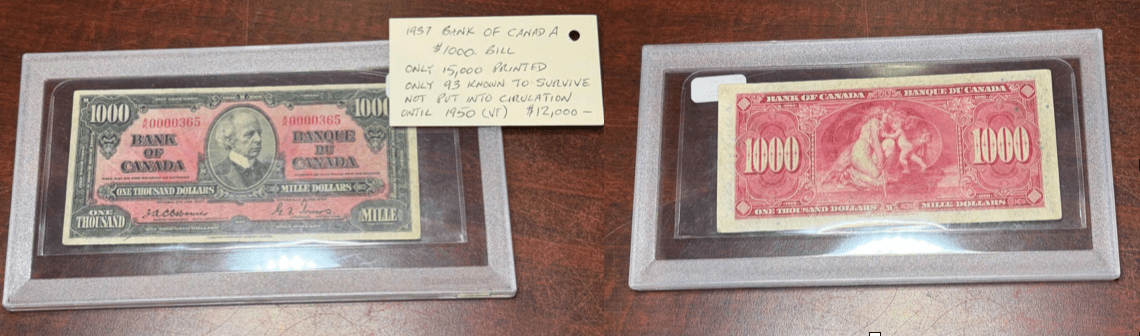
At a time when a new automobile could cost less than $1,000 and the average annual salary was only a few times that amount, this note represented an extraordinary sum of money. Yet the Bank of Canada printed these impressive bills as part of its 1937 issue, creating what would become one of the most famous banknotes in Canadian history.
Unlike the twenty-dollar bills and fifty-dollar bills most Canadians were familiar with, $1,000 notes rarely circulated among the public. Instead, they were used primarily by banks, businesses, and financial institutions to move large sums of money efficiently before the age of electronic banking.
The face of the note features former Prime Minister Sir Wilfrid Laurier, while the reverse displays an allegorical scene symbolizing Canada's prosperity and growth. The detailed engraving and elegant design reflect a period when banknotes were considered miniature works of art.
What makes these notes particularly fascinating is their rarity. Many were redeemed and destroyed over time as they returned to the banking system. Surviving examples are highly sought after by collectors and can command significant prices depending on condition, serial number, and provenance.
Today, the idea of carrying a $1,000 bill may seem unusual, but these notes remind us how dramatically the world of money has changed. From handwritten ledgers and paper currency to debit cards and digital transfers, each generation has witnessed a transformation in how value is exchanged.
For collectors, however, these remarkable banknotes remain tangible pieces of Canadian history—small sheets of paper that once represented a fortune. |
0 Comments
Join the conversation
Be the first to comment
Share your thoughts above.