
On Being Balanced |
On One Foot or Both |
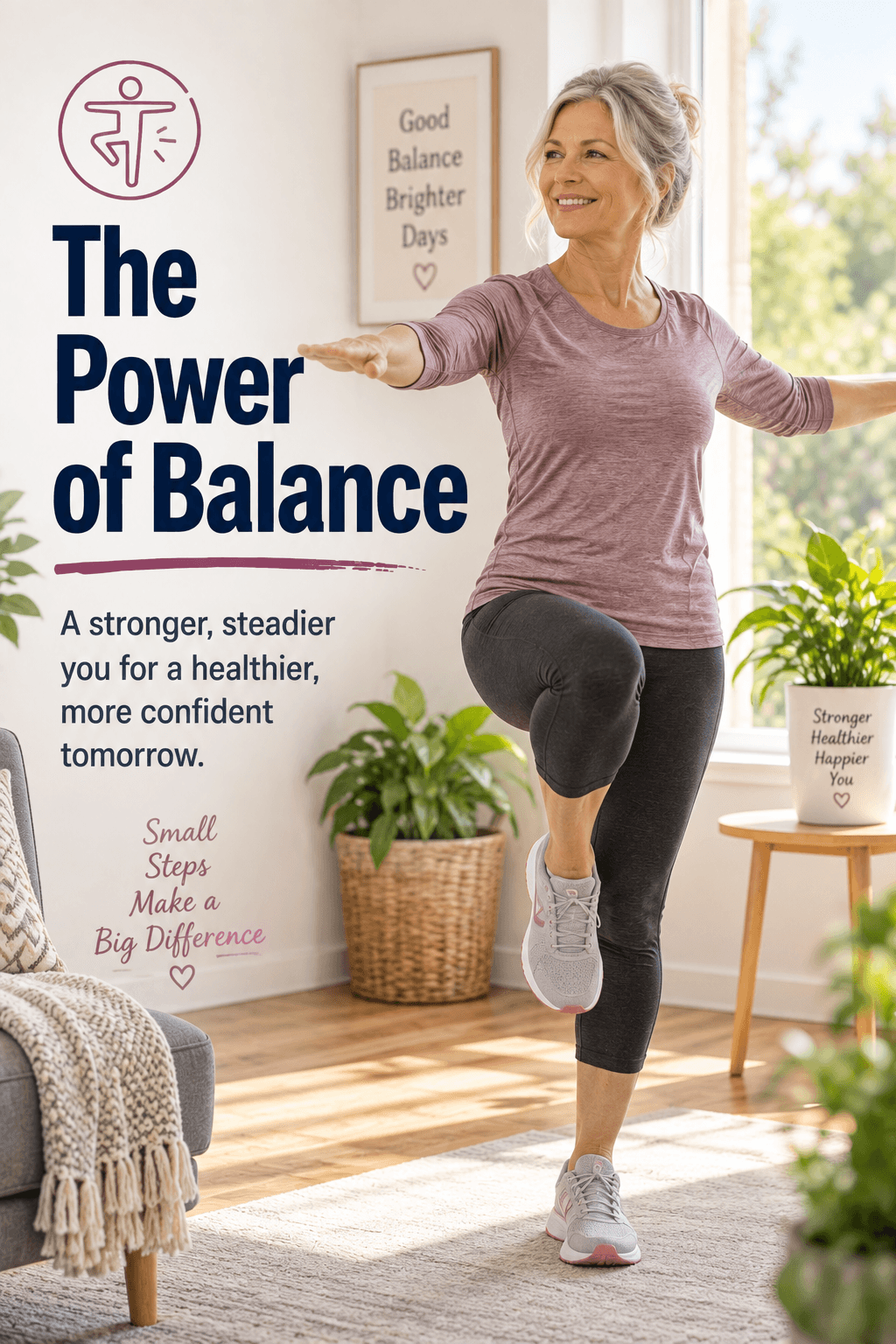
When we think about staying healthy as we age, we often focus on walking, strength, or flexibility. But there’s another ability that deserves just as much attention: balance.
Good balance helps us move confidently through everyday life. We use it when climbing stairs, stepping off a curb, reaching into a cupboard, getting dressed, or simply walking across an uneven surface.
And like strength, balance can be practiced and improved.
Why Balance Becomes More Important
Our sense of balance depends on several things working together—including our muscles, vision, joints, and inner ear.
As we get older, changes in strength, flexibility, eyesight, medications, or certain health conditions can make staying steady more challenging.
Maintaining good balance can help you:
You don't need complicated equipment to work on it.
Try the Countertop Balance Test
Stand beside a sturdy kitchen counter so you can hold on if necessary.
Stand tall with your feet together and see if you can comfortably maintain the position for 20–30 seconds.
If that feels easy, try placing one foot slightly in front of the other. For more challenge, and only if you feel safe doing so, briefly lift one foot a small distance off the floor while keeping your hand close to the counter.
The goal isn't to see how long you can wobble without holding on. Safety comes first.
Everyday Activities Count
Balance doesn't have to be a separate workout.
You can practice while:
Even a few minutes regularly can help make balance exercises part of your routine.
Don't Forget Your Legs
Strong legs play an important role in keeping you steady.
Simple movements such as repeatedly standing up from a sturdy chair, walking, climbing stairs, and doing gentle calf raises while holding a counter can help maintain the muscles you rely on every day.
This makes balance and strength a powerful combination.
Make Your Home Balance-Friendly
Practicing balance is useful, but reducing unnecessary hazards is important too.
Keep walkways clear, secure loose rugs, make sure stairs are well lit, and avoid leaving cords or clutter where they could become tripping hazards.
Small changes around the home can make everyday movement safer.
Quick Tip
Try practicing balance for one minute while you're already waiting for something—your coffee brewing, the microwave finishing, or the kettle boiling.
Keep a sturdy counter or chair within reach.
One minute doesn't feel like exercise, but it's an easy habit to repeat.
The Takeaway
Balance isn't something we should wait to think about until it becomes difficult.
Just like muscles, it benefits from regular use and practice.
A little balance training, combined with staying active and maintaining leg strength, can help you continue moving confidently through everyday life.
Stay steady. Stay strong. Keep moving. |
6 Comments
Join the conversation
It helps to have good lighting in the hallway, especially at night.
Decent advice but some folks have health issues that make even standing tricky. Be careful.
Tai chi helped my mom a lot. Her balance really improved after a few months.
Standing at the counter for 30 seconds sounds simple. Appreciate the tip!
I always tell my dad to clear the hallways. Rugs are the worst for tripping.
I never thought about balance exercises before. Going to try practicing when I brush my teeth.