
Who Invented the Vacuum Cleaner? |
Today, cleaning the floor can be as simple as plugging in a vacuum—or letting a robot do the job for you.
But the first successful powered vacuum cleaner was anything but convenient.
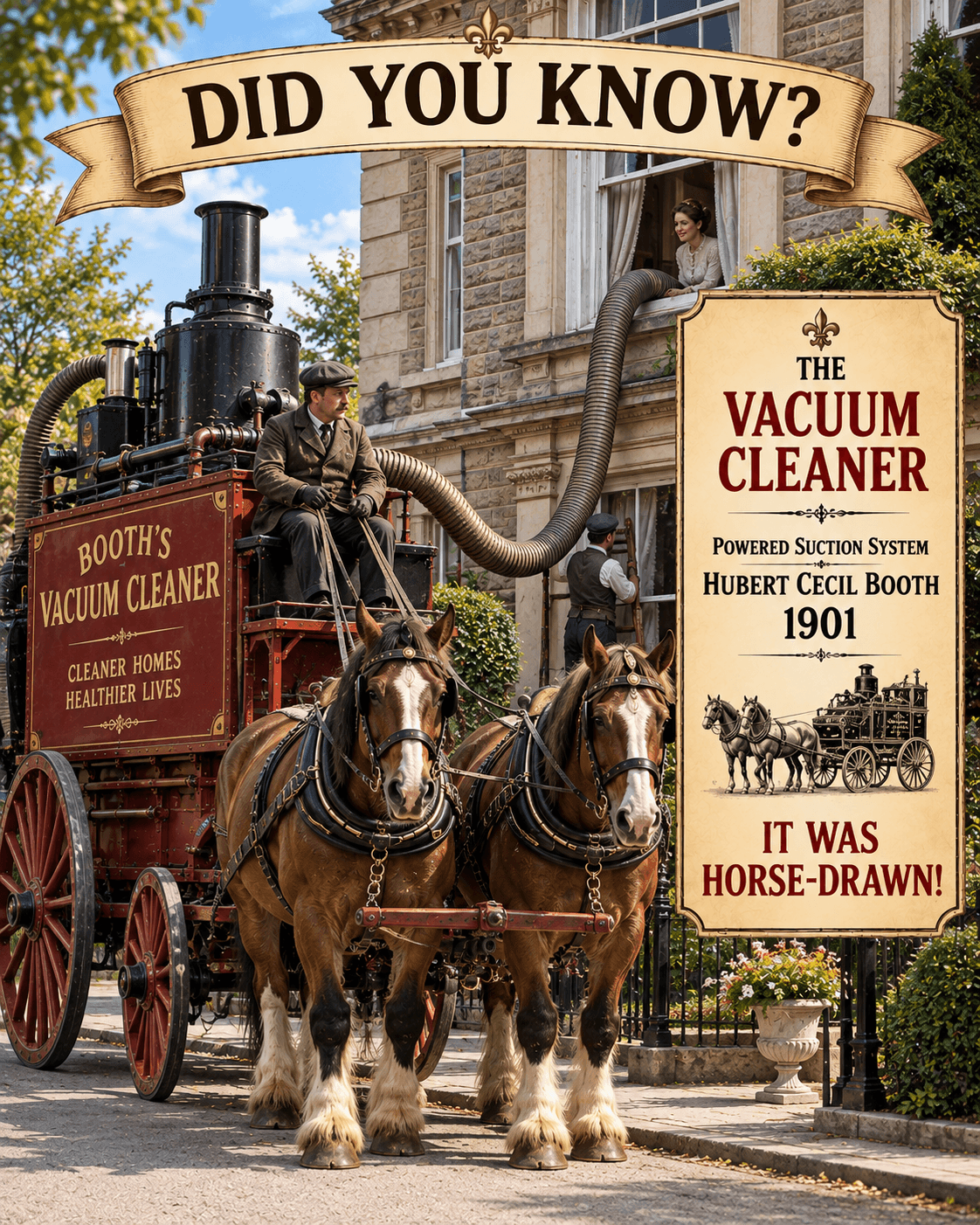
It was huge, noisy, horse-drawn and couldn't even be brought inside the house!
Before the Vacuum Cleaner
For centuries, rugs and carpets were cleaned by sweeping them or carrying them outside and beating them to remove the dust.
During the 1800s, inventors began developing mechanical carpet sweepers and machines that attempted to clean carpets by blowing air across them.
Then a British engineer named Hubert Cecil Booth had a different idea:
Instead of blowing the dirt away, why not suck it up?
An Idea Inspired by a Demonstration
Around 1901, Booth reportedly watched a demonstration of a machine that used compressed air to blow dust from railway-car seats.
Booth questioned why the machine didn't simply suck the dust into a container.
According to the story, he even tested the idea by placing a handkerchief against a dusty chair and sucking air through it with his mouth.
When he saw dirt collected on the other side of the cloth, he knew the idea could work.
Fortunately, his actual machine used an engine rather than Booth's lungs!
The Giant Horse-Drawn Vacuum
In 1901, Booth patented his powered vacuum-cleaning system. But this was definitely not a machine you could store in the hall closet.
Booth's enormous vacuum equipment was mounted on a horse-drawn carriage and parked outside a customer's home or business. Long hoses were then fed through doors and windows.
An engine created suction while workers moved the hoses around inside, drawing dust and dirt out of carpets, curtains and furnishings and into the machine outside.
The service became known as "Puffing Billy."
Imagine seeing a giant red horse-drawn machine arrive outside your neighbour's house just because it was time to vacuum the carpets!
From Giant Machine to Household Appliance
Booth's invention demonstrated that suction was an effective way to clean.
The next challenge was making the machine small enough for ordinary people to use.
In 1907, American inventor James Murray Spangler, a department-store janitor, created a much smaller portable electric vacuum cleaner using readily available parts, including an electric fan motor, a soap box and a pillowcase to collect the dust.
Spangler later sold the patent rights to William Henry Hoover.
Hoover's company improved and marketed the machine, helping turn the portable vacuum cleaner into a household appliance.
The Hoover name became so closely associated with vacuum cleaners that in Britain, "hoovering" eventually became a common word for vacuuming.
From Horses to Robots
In a little over a century, the vacuum cleaner has gone from a machine so large it needed horses to move it to cordless stick vacuums and robotic cleaners capable of travelling around the house by themselves.
But the basic idea remains the same one Booth championed more than 120 years ago:
Don't blow the dirt around—suck it up!
Fun Fact
Booth's early vacuum-cleaning service didn't bring the vacuum into your house.
The machine stayed outside while enormous hoses were passed through the windows!
Customers weren't really buying a vacuum cleaner—they were hiring a vacuum-cleaning service. |
3 Comments
Join the conversation
Booth using his mouth to test the idea... That's dedication.
Never knew that's why the Brits say 'hoovering'. Makes sense now!
So glad we don't need a horse when I want to clean the living room!